Power Up Your Customer Engagement With Marketing Automation
Most businesses today operate in a highly competitive environment, vying for the attention of their audience to ensure their offering is the first one that comes to mind when the need arises. Unless your product is a low-cost, regular purchase (such as groceries), the chances are most consumers don’t make an on-the-spot decision to buy. With buying behaviours shifting from transactional to relational, how do stay connected to your audience?
Out of Sight, Out of Mind
It goes without saying that to keep your business running it’s vital to closely manage sales leads, continuously engage with existing customers and retain those who may have one eye on the door. Without regular contact and consistent messaging that matches their interests, it is all too easy for your prospects and even existing customers to fall through the cracks.
When it comes to lead generation, a golden rule of marketing states that it takes on average seven touches to convert a prospect to a customer. Every product or service has a ‘ customer journey’, a number of steps that take potential customers from awareness of your brand to a purchasing decision. Whether you run a small business with a handful of staff or a larger business with a dedicated marketing department, there simply won’t be enough time to personally deliver each of these interactions at the right time with the right message.
What if your business had a dedicated resource that knew your customer journeys inside and out, worked around the clock, never missed a deadline and knew every customer by name as well as their preferences and habits. Furthermore, what if it didn’t even cost a penny?
Offloading the Legwork
Marketing technology, or ‘martech’ is enabling marketing departments to work smarter, more efficiently, and at the end of the day – get more done. Marketing automation is such a tool that can dramatically increase the number of customer interactions your business can achieve by taking care of repetitive, pre-defined tasks on your behalf.
The customer journey invariably has steps that are common to all customers and are repeated again and again with a common element of personalisation each time. It is precisely these activities that lend themselves to automation. With more sophisticated marketing automation systems, these steps can be linked together to build a workflow that adapts to each customer automatically with no external action or decision-making.
For example, marketing automation can be used to:
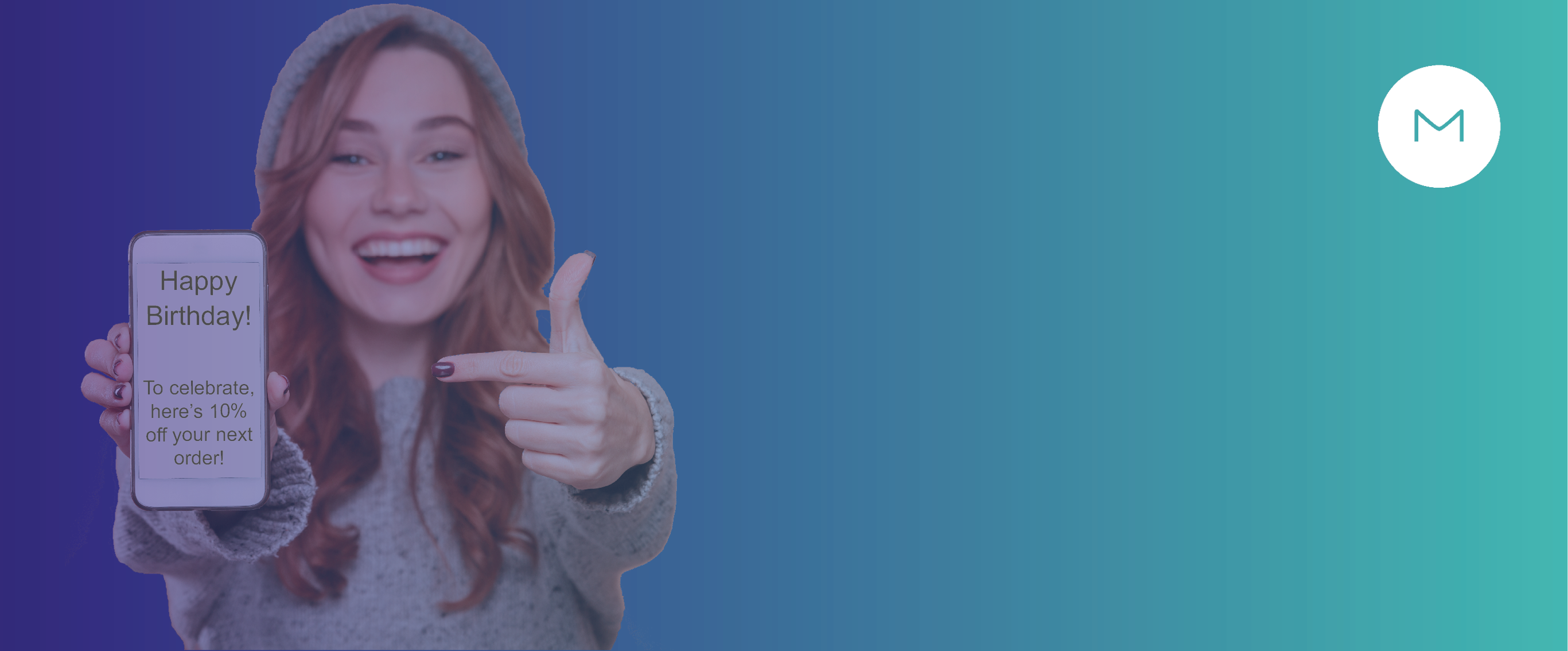
- Send subscribers a Happy Birthday email every year on their Birthday
- Send an email or a series of emails to subscribers when they have joined a group
- Send a welcome email to people when they first join your group
- Send a campaign and then send another email if they click a certain link
- Update a user’s record when they click a certain link
- Send a voucher to a new customer
- Send an invoice just after they purchase something on your store
Marketing automations can be initiated when a desired event or trigger occurs. As seen in the examples above, these triggers can be action-based (when a customer signs up to a mailing list), behaviour-based (when a customer visits a specific web page) or time-based (customer birthday or national holiday). The automation will then take an action, whether it instantly sends an email, delays for a specified time or waits for a secondary trigger. These actions can be specifically targeted according to each trigger, ensuring the content is highly relevant to the customer.
Customer Experiences that Inspire Loyalty
For example, a prospect visiting a page on your website that highlights your expertise in the recruitment sector could receive a follow up email with a case study of a recruitment company. This relevant, personalised content is more likely to result in interest, desire to engage with you and ultimately - the sale.
It is not only with potential customers that automation can be applied. Why not send a follow up email a few days after each order to thank your customers for their purchase and highlight any other relevant products that they may be interested in? Furthermore, frequent interaction offers a huge opportunity to increase the value of each customer by upselling and cross-selling to those who are already engaged with your business. Marketing automation can generate additional sales by bringing new products and services to their attention based on their customer profile and past behaviour. All of this can take place in the background, enabling you to focus on other areas of your business.
Automation for All
Fortunately, martech in 2019 isn’t just for big business. The numerous benefits of automation are easily achievable for businesses of all sizes. Powerful, flexible software products are now available that include marketing automation as part of their standard product offering.
Email marketing platform transpond features a unique automation builder as well as a range of templates for the most popular tasks like sending users Birthday Greetings, welcoming new users and much more. To find out more, visit: https://kb.transpond.id/hc/en-us/articles/360016385491-How-to-setup-an-Automation
New to transpond? Visit our website at www.transpond.id to experience email marketing built for the future.