The worst email marketing ever (and what you can learn from it)
At Transpond, we’re big fans of email marketing. It’s one of the most effective forms of marketing, enabling you to nurture relationships at scale. You can talk to thousands of prospects and customers at once, delivering personalized messages to each person.
However, not all email marketing is created equal. Between you and me, some of it is actually pretty bad. Maybe it’s a scammy subject line, boring content, or weirdly aggressive promotions for something you’d never buy in a million years.
In this post, we’re taking a lighthearted look at some of the worst email marketing blunders, along with some advice on how to avoid making the same mistakes.
1. Suspicious subject lines
The subject line is one of the most important parts of your email. Get it right and you’ll make a good first impression, increasing the chance of a positive outcome. Get it wrong, and people won’t even bother opening the message.
One of the most notorious cases came from a promotional campaign for Shifty, a 2008 British crime thriller. The film has a decent enough IMDb rating (6.5 at the time of writing), but it’s the marketing campaign that really grabbed the headlines.
The marketers came up with the idea of allowing visitors to the film’s website to “stitch up a friend”. The friend would then be sent a personalized email with the ominous subject line “CRIMINAL INVESTIGATION”. The email used the very official-sounding “communitydrugsteam@ukgov.org.uk” and warned the recipient that they risked criminal prosecution unless they agreed to regular counseling and drug testing.
The result? Panic, complaints, and a swift ban from the UK Advertising Standards Authority (and more than likely a few people reevaluating their choice of friends).
Of course, not every bad subject line is so extreme. Sometimes it’s just plain clickbait (“Fw: You need to see this”), unnecessary SHOUTING IN ALL CAPS, or awkward phrasing like “Re: Your account” when there’s no prior conversation. These tricks might spike curiosity in the short term, but they also damage long-term trust.
Lesson: You can be intriguing without being misleading. Your subject line should set expectations, spark interest, and make sense in the context of your relationship with the reader. If you wouldn’t say it out loud to a customer in person, don’t put it in their inbox.
2. Dreadful designs
A good visual design complements your email message, helping it stand out without stealing the show. Bad design, on the other hand, can overshadow everything else.
Usually, bad design comes as a result of someone playing with new tools without understanding basic design principles. They’re suddenly able to create emails full of visuals and end up going overboard, throwing out emails with bright neon text on busy patterned backgrounds, or ten different fonts fighting for attention.
Sometimes the visuals themselves are okay, but the sender makes the mistake of sending everything as an image. The message looks fine in your own inbox, but for anyone with images turned off, it’s just a blank white box.
Mobile viewing makes the situation worse. What looks “quirky” on a desktop can become unreadable chaos on a small screen. Then there are the emails that try so hard to be “creative” that they forget about accessibility entirely, with tiny text or color palettes that make your eyes ache. Creativity is great, but not if it means your audience literally can’t read your email.
Lesson: Prioritize clarity over creativity. Use a simple, mobile-friendly layout, limit your fonts, keep colors accessible, and always test your email across devices before sending. You want readers to remember your offer, not your clashing color scheme.
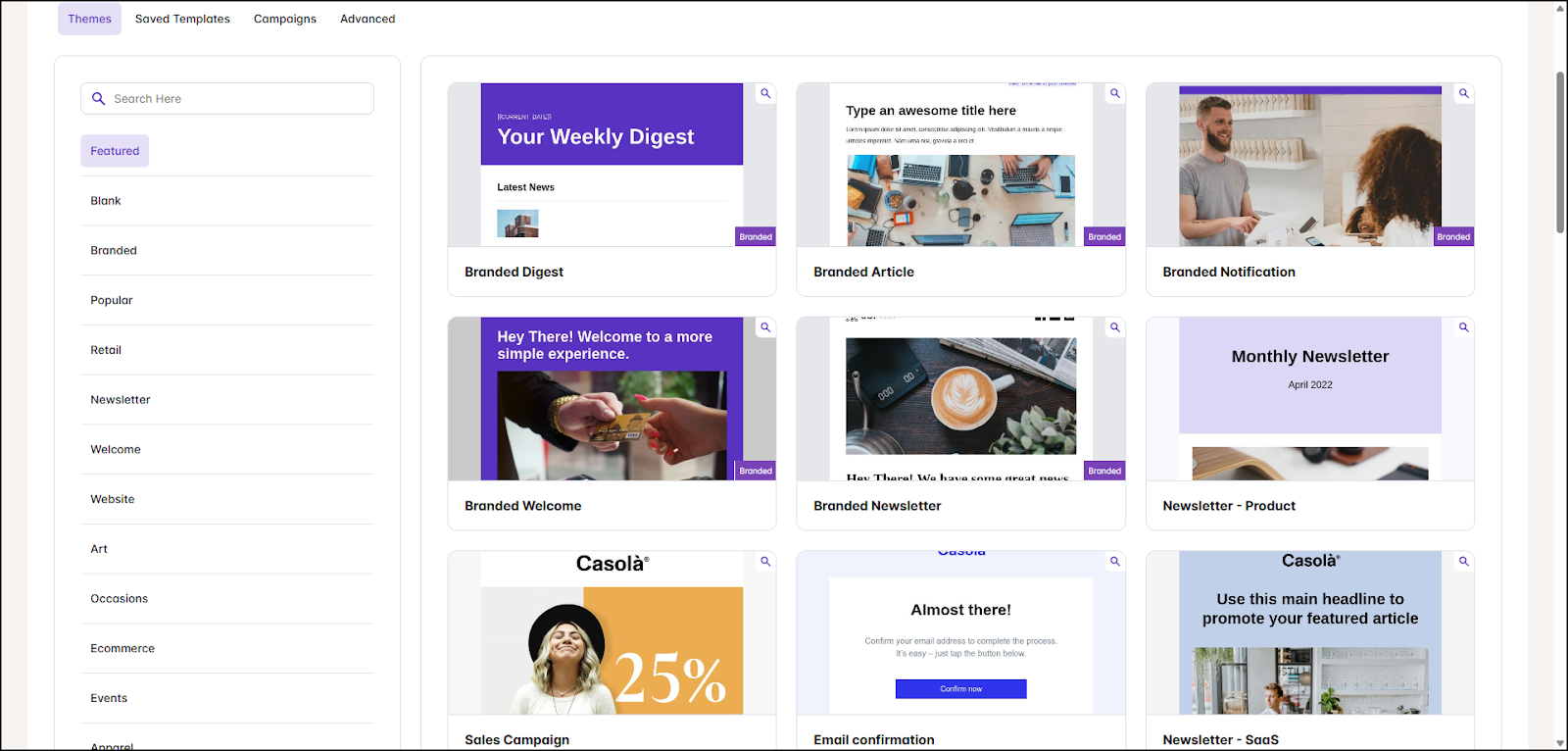
If in doubt, use professional email templates, so you can focus on the message instead of the visuals. Transpond has a gallery of stunning templates, along with a user-friendly drag-and-drop editor and a Brand Analyzer to ensure every template reflects your brand.
3. Perplexing personalization
Nobody wants to feel like they’re just another entry in some giant database, and personalized emails are one way to build those stronger customer relationships. Personalization is supposed to make your subscribers feel special, like every message is meant just for them.
The most basic form of personalization is using someone’s name. Now, most people realize that you’re not actually writing each individual email. Still, seeing that first name is a nice touch that gets positive results. For example, one study found that personalized subject lines had a 35.69% open rate, more than double the open rate for non-personalized emails (16.67%).
However, if your attempts at personalization go wrong, it’s worse than no personalization at all.
We’ve all seen emails starting with “Hi {FirstName}” because the merge tag didn’t pull through, or “Hello ,” with that awkward blank space because the data field was empty. The intention’s good, but incorrect data or a sloppy setup just ruins the immersion and hurts your brand.
Lesson: Personalization is powerful, but only if it’s accurate. Always test your merge tags and set sensible defaults (“Hi there” works a lot better than an empty space).
4. Sloppy segmentation
While personalized merge tags are great for adding unique information to your emails, segmentation helps you create tailored messages for different groups in your audience. For example, if you own a pet store, you could create separate segments for cat owners and dog owners. It lets you send the right message to the right people at the right time.
It’s a powerful idea, but if you mix up those segments, your emails could end up confusing your audience. In the worst cases, they might even upset them.
One infamous example comes from Shutterfly. The photo printing company accidentally sent a “Congratulations on your new baby!” email to a huge swathe of its customer base. For some recipients, it was harmlessly irrelevant. However, for others, it touched on deeply personal situations. Shutterfly quickly issued an apology, but the damage was already done.
These kinds of segmentation mistakes are all too easy to make. For example, you might inadvertently send a Christmas promotion to customers in countries that don’t celebrate Christmas, or blast out a “Happy Mother’s Day” email to people who’ve specifically opted out of family-related content.
Lesson: These slip-ups usually come from overly broad segments, poor data hygiene, or a lack of planning. Take the time to define your audience criteria clearly and test your campaigns before sending. A few extra minutes of QA can save you a lot of customer frustration.
5. Confusing call-to-actions
Your call-to-action (CTA) is the whole reason you sent the email. It’s the “click here,” “buy now,” or “sign up” moment that turns readers into customers. If your CTAs aren’t clear, your reader is more likely to ignore them and move on.
This usually happens when you’re trying to do too much with one email. For example, an event organizer might send one follow-up email to attendees from multiple events, each with its own button, link, and instructions. Readers then have to work out which part applies to them, and many won’t bother.
Another common scenario is the “everything must go in this email” approach. Picture a newsletter that promotes a sale, a webinar, a blog post, and a new product launch, all with equal prominence. With four competing CTAs, it’s unclear what the reader should do first (or if they should do anything at all).
For example, Impossible Foods shared an email that includes CTAs for finding retailers, creating specific recipes, finding more recipes, and finding restaurants.
Lesson: Every email should have one primary action you want readers to take. If you must include secondary CTAs, make sure they’re clearly secondary. Think smaller links in the footer, not competing buttons.
6. Phony promos
Most people love a good promotion. Recipients get a chance to win a prize or redeem an exclusive offer, while the sender gets more eyes on their offer. Promotions are supposed to spark excitement (and hopefully, sales). Unfortunately, sometimes a well-intentioned campaign takes a hard left turn into disaster territory.
Take Dare Iced Coffee in Australia, which ran a promotion offering a share in up to $1 million or $500 every hour. So, imagine how you’d feel opening up your inbox and finding you'd won a pre-paid card with $1,000 to spend. Pretty exciting, right? There was just one problem: it wasn’t true. The email was the result of a technical error. Within hours, the company followed up with an email correcting their mistake, but customers weren’t happy.
It was a costly mistake and, in the end, the company offered a $50 e-gift voucher to those affected to try and win back their trust. It’s a textbook example of how even the smallest technical slip-up can snowball when you’re dealing with thousands of inboxes..
Lesson: Test your promos thoroughly before launch. Double-check your automation triggers and any third-party systems you might be relying on. Transpond makes it simple to preview your emails and send tests to confirm everything’s correct. A broken link might frustrate someone, but a broken promise could cost you customers.
From the worst email marketing to the best
Bad email marketing is equal parts cringe and cautionary tale. From misleading subject lines to promo fails, every mistake on this list has one thing in common: it could have been avoided with better planning.
They’re a free masterclass in what not to do and a reminder that email marketing works best when it’s clear, relevant, and respects your audience. Get those basics right, and instead of confusing your readers, people will actually look forward to receiving your emails.
Get started with Transpond for free to start creating beautiful email marketing campaigns today.