There are so many ways to engage with customers today, from snail mail to social media comments, but newsletters stand out, enabling regular communication directly with your audience.
When done well, newsletters can be one of your most powerful tools for consistently building relationships and generating revenue. Unfortunately, most newsletters aren’t done as well as they could be. They’re too inconsistent, too generic, or, let’s be frank, too boring.
In this guide, we’ll walk you through each step to building a newsletter that people actually look forward to reading. Whether you’re starting from scratch or want to tighten up your existing emails, this guide will help you build a newsletter you’re proud to send out.
Step 1. Decide on your goal
Before you start writing your first newsletter, you need to know why you’re sending it in the first place.
If you want to send a newsletter purely because someone on LinkedIn told you it’s a good idea or because your favorite brand sends one, that’s not a good enough reason. Your newsletter will lack direction, and you’ll likely struggle to maintain consistency.
Newsletters can serve a lot of goals, going far beyond simply engaging your audience. Pick one or two that matter most to your business. For example, maybe you want to:
- Drive traffic to your website
- Build trust with educational or behind-the-scenes content
- Promote offers and generate sales
- Nurture leads who aren’t quite ready to buy.
Trying to do everything in one email rarely works. A promo, a personal story, five blog links, and a random video? That’s a recipe for confusion (and most likely a prompt unsubscribe).
Instead, define your main goal early. That clarity will shape every decision you make, from tone to content to frequency.
Step 2. Understand your audience
As important as your goals are, you also need to think about your reader’s goals. Ask yourself what your ideal subscriber cares about most. What problems do they face? What do they already know? What do they need to know?
For example, let’s say you run an online store for eco-friendly home goods. You discover your audience cares about sustainable living. Knowing that, you can create emails that help them adopt a more environmentally friendly lifestyle, maybe with how-to guides and lifestyle tips.
A common mistake at this point is assuming you know your customer. The single most important part of building an ideal customer profile (ICP) is taking the time to talk with your customers and getting to know what really matters to them, not guessing.
If you’re using newsletter sign-up forms on your website (and you should be), consider asking a simple question immediately after sign-up, like “What do you want to hear more about?” or “What’s your biggest challenge?” It’s a small touch that helps you personalize content from the start.
Step 3. Choose the right format and frequency
The next decision is how it should look and how often it should go out. Get it right, and your newsletter becomes something readers genuinely look forward to. Get it wrong, and it’s just more noise in their inbox.
When it comes to the format, there’s no single “best” choice, just the best for your purpose and audience.
For example, curated roundups share links, product picks, industry news, or partner content. These work well for audiences who value being kept in the loop. The Superhuman newsletter is a great example, with daily updates on what’s going on in the world of artificial intelligence (AI).

On the other hand, you could try sending deep dives or stories, with one strong idea per issue. This can be an opinion piece, a behind-the-scenes look, or an insightful guide. These newsletters are great for building thought leadership or telling your brand story. Ann Handley does a fantastic job of this, sharing her thoughts on marketing and writing in a way that feels just like you’re having a conversation with a friend.
You could also run a more promotional newsletter, announcing product drops and discounts. Promos are fine when your audience already knows you well, or when your business model is built around it. For example, Bookbub’s newsletter shares daily deals on ebooks, while AppSumo sends exclusive software offers.
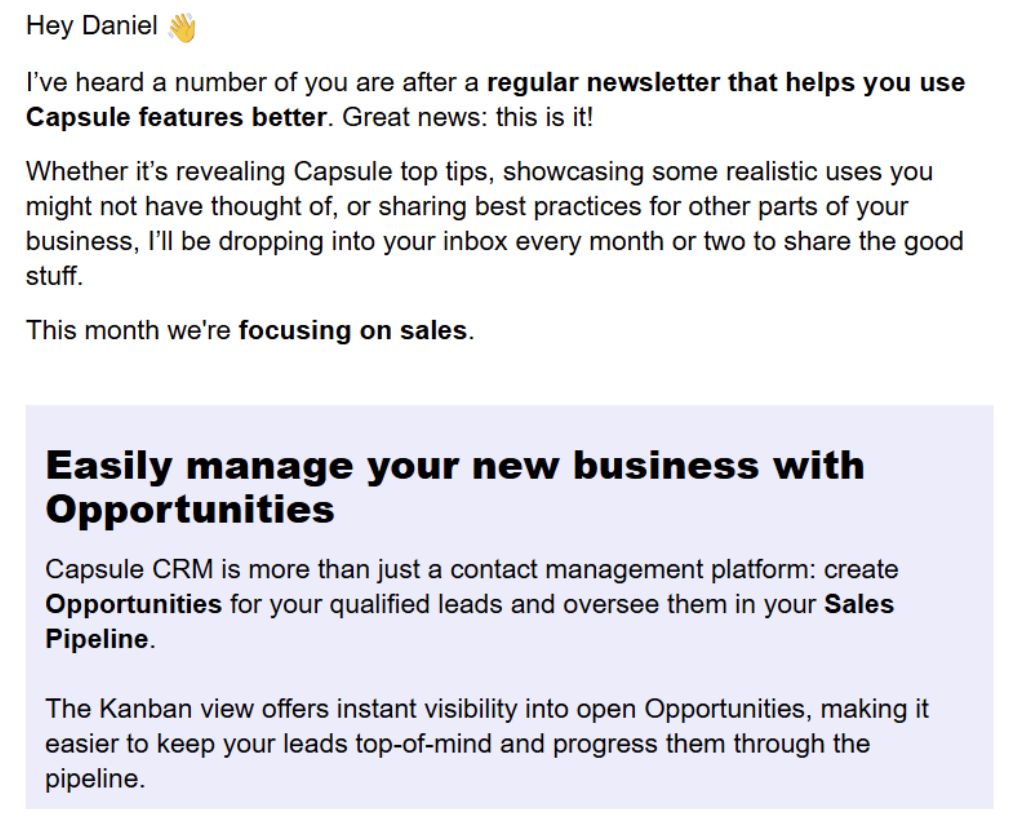
Of course, nothing is stopping you from creating a hybrid newsletter, with a mix of short stories, links, updates, and offers. Capsule CRM sends subscribers a carefully curated newsletter with a collection of the best insights, tips, updates, and more. Each one focuses on a specific topic, so readers get all the information they need without becoming overwhelmed.
How often should you send your newsletter? Again, there’s no one-size-fits-all answer. As a rule of thumb, you should send as often as you can deliver consistent value, and no more than that.
Some businesses can send daily emails without burning out, but not many can keep up that pace and not overwhelm their audience. Weekly is great for staying top of mind, but even a monthly newsletter can be enough to keep your readers engaged.
It’s tempting to overpromise, but it’s better to start small and grow later. Missed emails or rushed content are more damaging than a slower, steadier rhythm.
Step 4. Start strong with your subject line
Your subject line is the first (and sometimes only) thing people see, so you need to make it count.
Vague or overused subject lines like “Our latest newsletter” don’t stand out and will likely get ignored.
Here are some quick tips for writing subject lines that get opened:
- Keep it short, ideally under 50 characters
- Highlight tangible benefits or build curiosity (but avoid clickbait)
- Add personalization, like a first name or location
- A/B test different versions to see what works.
Let’s go back to our eco-friendly home goods store example.
Instead of a rather vague or bland “Eco products update”, go with a more specific, relevant subject line like “5 easy swaps for a more eco-friendly kitchen” or “How to cut plastic waste without changing your lifestyle”.
Step 5. Create compelling content
Five steps in and we’re now ready to start writing our newsletter ?.
Similarly to your subject line, the first sentence is vital for grabbing your reader’s attention (especially as most email clients include a preview of your message). Whether you’re in B2B or B2C, the start of your email should feel like the start of a conversation, not a corporate announcement. A casual, helpful tone works best for most audiences.
For example, something like “You ever notice how so many so-called 'environmentally friendly' products come wrapped in plastic? Yeah, me too.” is so much more engaging than “Welcome to our June newsletter, where we discuss the importance of proper product packaging.”
As you go on to write the rest of your newsletter, structure your content for readability. People scan emails before they read them, so use straightforward subheadings and keep paragraphs short (one to three lines at most). Make sure each section serves a purpose, with one clear idea for readers to grasp.
When you’re ready to wrap it up, end with a clear call to action (CTA). What should your reader do next? Whether it’s reading a blog post, checking out a new product, or replying to your email (great for engagement and improving deliverability!), make it obvious.
One CTA is usually enough. Packing in too many messages or links can overwhelm the reader and hurt your click-through rate.
|
Bonus tip: Visuals can help support your message. For example, product photos can convey far more information than a lengthy description. Transpond makes this easy with a drag-and-drop campaign builder that lets you add images, buttons, and layout blocks without any coding. |
Step 6. Personalize and segment
One of the biggest advantages of email over social media is the ability to tailor content to each individual. The more relevant your newsletter feels, the more likely it is to get opened, read, and acted on. That’s where personalization and segmentation come in.
Start with simple personalization. At the most basic level, simply using your subscriber’s name in the subject line or greeting can positively impact open rates. You can also personalize your messages using other criteria, such as:
- Location (e.g., for in-person event invites, shipping offers)
- Interests (based on signup form answers)
- Past behavior (opened emails, clicked links, previous purchases).
These small touches make a big difference. When people feel like the content is meant for them, they’re more likely to engage.
Personalization becomes easier when you segment your list into groups based on shared traits. For example, you might have segments for new sign-ups vs. long-time subscribers, or free vs. paid users. You could then send a welcome series to new subscribers, or a discount offer to people who viewed your pricing page.
This doesn’t mean you have to write 101 different newsletters, though. Simply tailor the key parts to make them more relevant to each reader. With a tool like Transpond, you can use conditional merge tags to show or hide sections based on audience traits.
Step 7. Test and track
You’ve written your content, designed it beautifully, and set it up for the right audience. Now it’s time to make sure everything works before it lands in inboxes. Testing and tracking are how you improve over time and avoid any embarrassing mistakes.
Check how your email looks on desktop and mobile. Spellcheck should hopefully catch any typos, but it’s always worth reading it through to see if any have slipped through. Also, keep an eye out for any formatting issues, broken links, or placeholder text.
Send yourself a test email first. If possible, send it to a colleague as well. A second pair of eyes can catch things you’ve missed. Transpond makes this easy with a preview and test send option built into every campaign.
While this is a great way to catch mistakes, you can also use testing to optimize your emails to improve performance. With Transpond’s A/B testing, you can send two variations of your email to small segments of your list, then automatically send the winning version to the rest. Even small tweaks can lead to better open and click-through rates over time.
Once you’ve sent your newsletter out, check the results. Transpond’s analytics give you clear, visual insights into what’s working, so you can make your next email even better. Track metrics such as:
- Open rate. Are your subject lines and preview text working?
- Click-through rate (CTR). Is your content engaging and your CTA clear?
- Unsubscribe rate. Are you sending too often or missing the mark?
- Bounce rate. Are your emails reaching valid addresses?

Don’t ignore the data. If your open or click rates are consistently low, it’s a sign you need to adjust your subject lines, content, or segmentation. If your bounce rate is too high, then you need to review your newsletter sign-up process and how you verify email addresses.
Build, write, send, repeat
An effective newsletter doesn’t happen overnight. It takes time to find what works and resonates with your audience most.
However, you can jump-start your chances of success by putting a strong foundation in place. Define your goal, understand your readers, and choose a format you can stick to. Keep your content clear, useful, and personalized to the reader.
Your newsletter is part of a loop: Deliver value → earn trust → get shared → grow your list → repeat.
You don’t need hacks or gimmicks. Just keep showing up with content worth reading, and the rest will follow.
With the right approach (and the right tools, like Transpond) your newsletter can become one of your most powerful marketing assets.